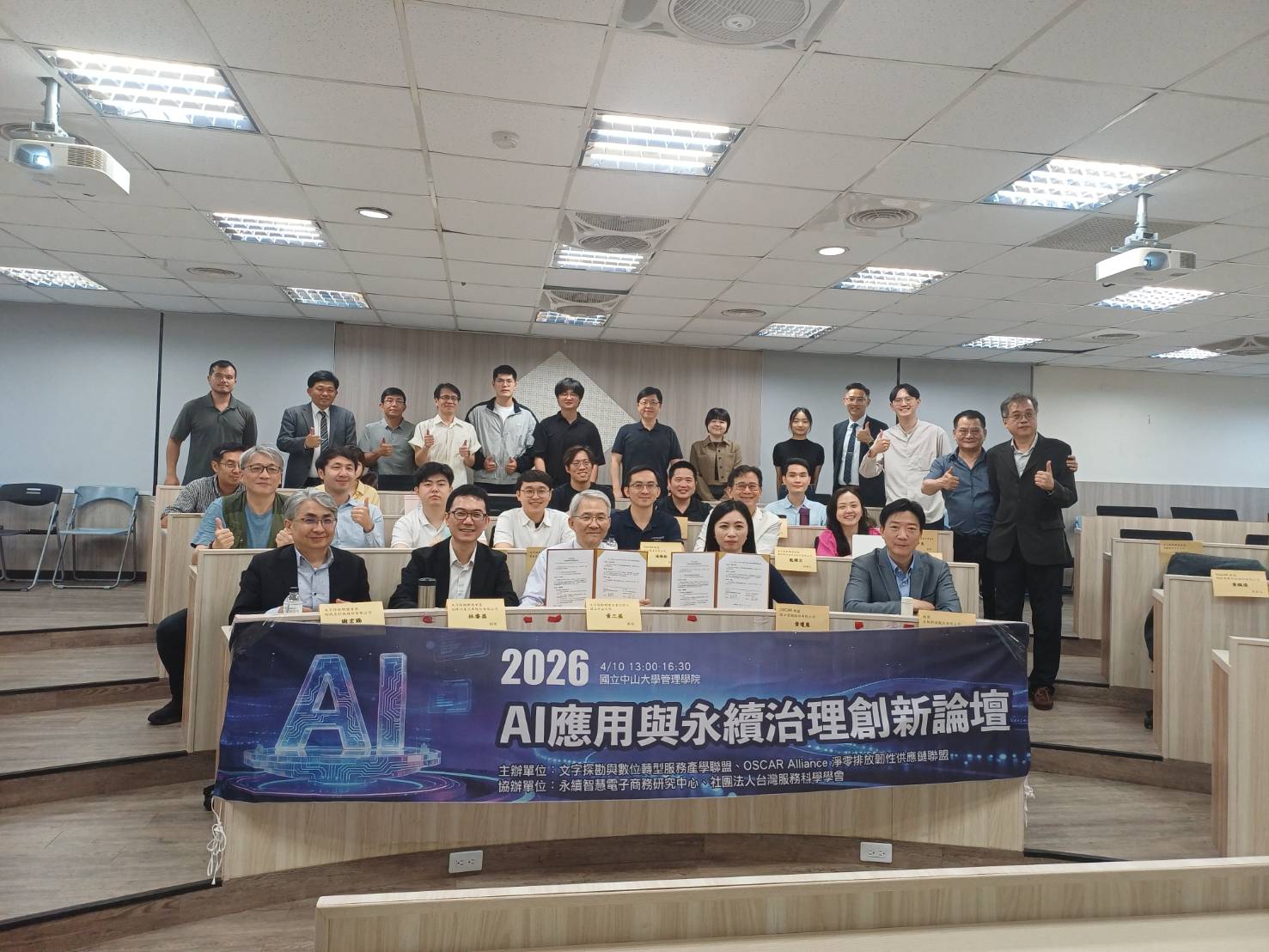
The alliance, in collaboration with the OSCAR Alliance (Net Zero Supply Chain Alliance for Resilience), held the “AI Applications and Sustainable Governance Innovation Forum” on April 10 at CM1037, College of Management, National Sun Yat-sen University. The event attracted 40 participants and provided a platform to explore how artificial intelligence and net-zero initiatives can be integrated to drive enterprise transformation.
The forum featured four invited talks from industry representatives of HAMASTAR Technology, Yulon Nissan Motor, Kexin Enterprise, and Taiflex Scientific. The speakers shared practical experiences and case studies on AI-driven transformation in areas such as marketing, knowledge management, and sustainable business operations.
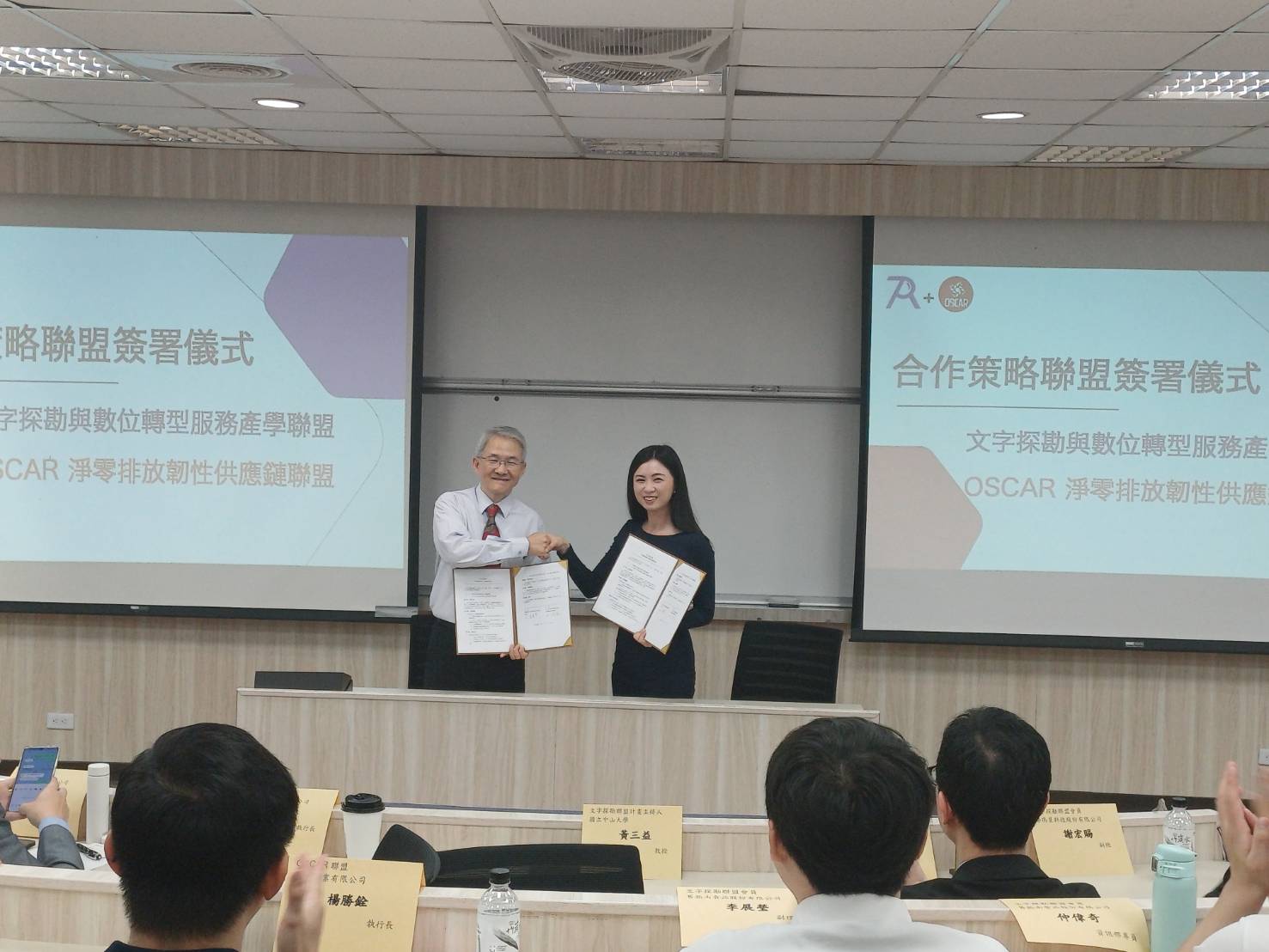
This event was jointly organized by the two alliances, and a cooperation agreement was officially signed during the forum, symbolizing a commitment to deepen collaboration and jointly promote the integration of AI applications and sustainable development, thereby accelerating digital transformation and net-zero goals across industries.
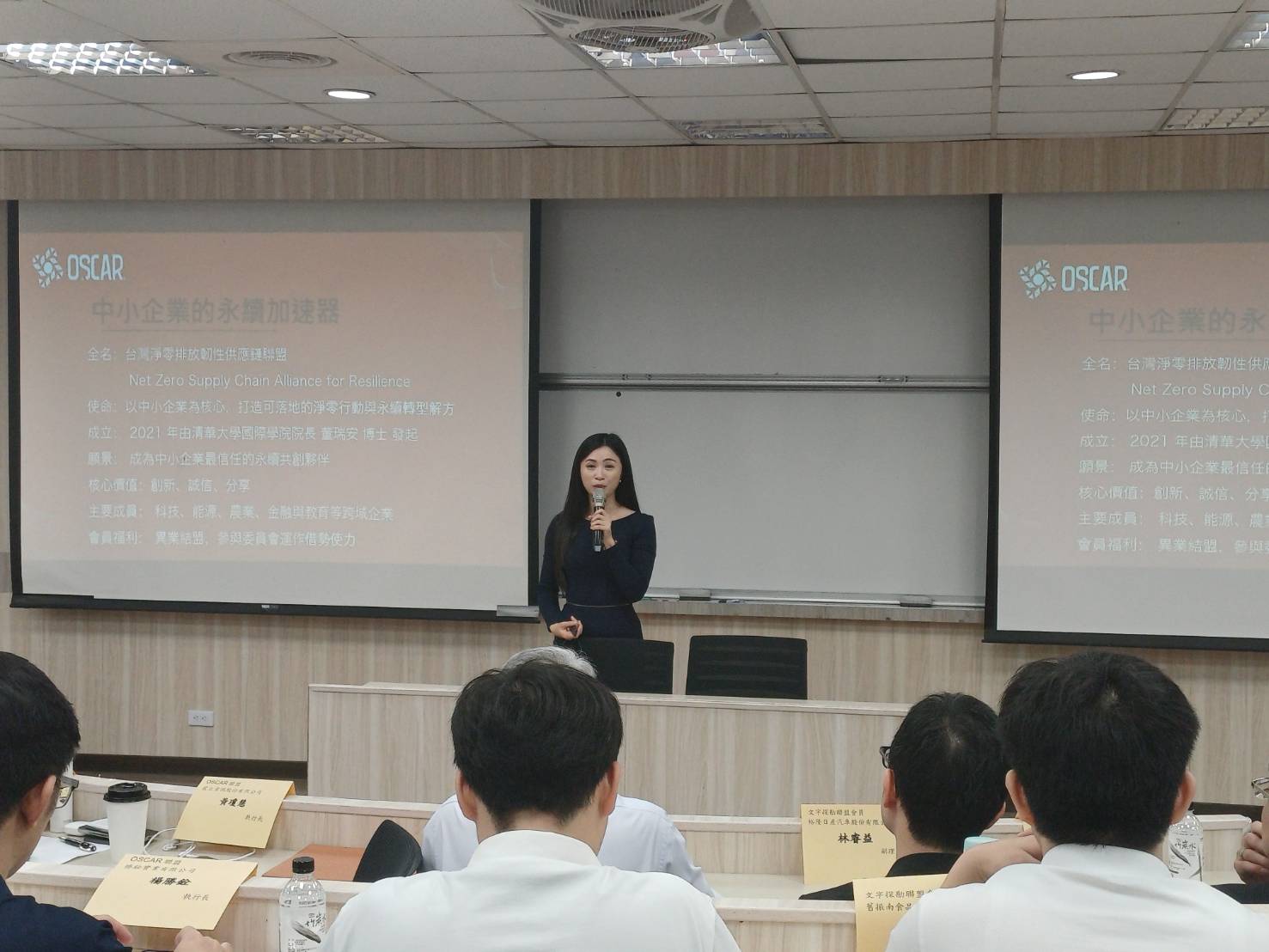
The forum began with an introduction to the OSCAR Alliance by Ms. Huang Chiung-Hui, Executive Director of the Southern Region. The OSCAR Alliance focuses on supporting SMEs in implementing sustainability practices through industry-academia collaboration and professional consulting, helping establish traceable carbon data systems and AI application cases.
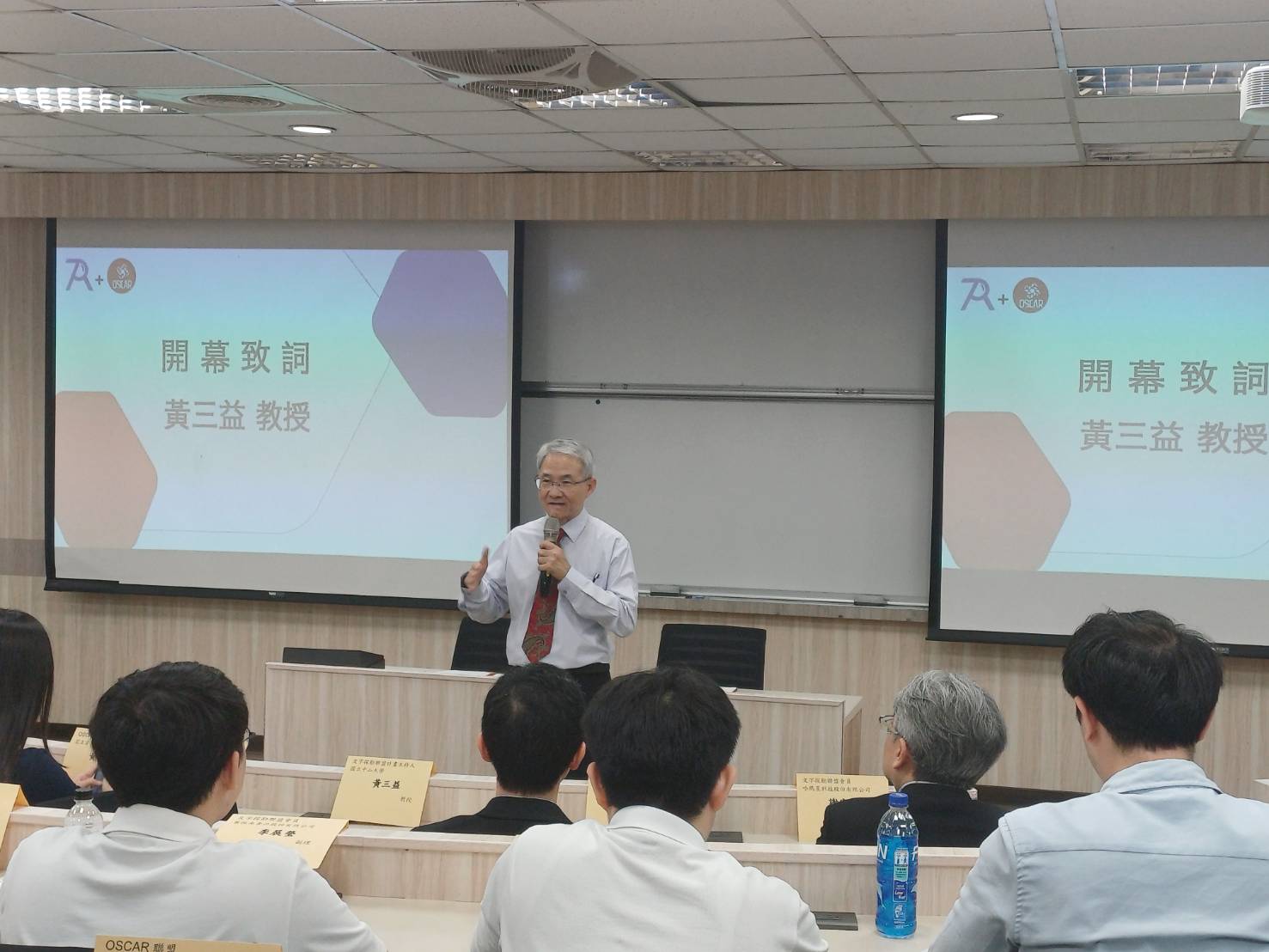
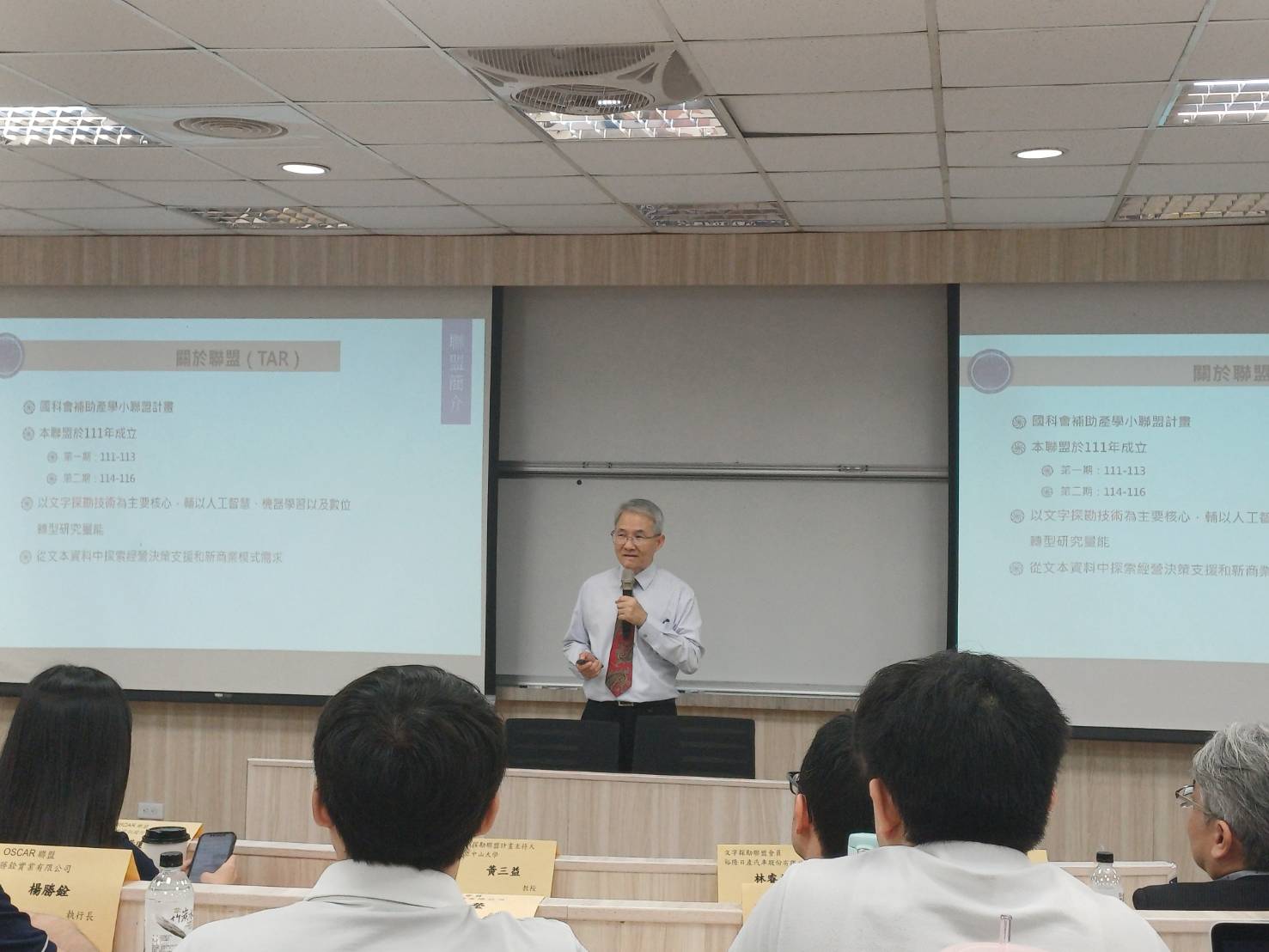
This was followed by a presentation from Prof. Huang San-Yi, Principal Investigator of the Industry-Academia Alliance, who introduced the alliance’s technical services and shared insights on generative AI trends and collaboration experiences. He highlighted the rapid global investment in generative AI—particularly large language models (LLMs)—which have evolved from simple conversational tools into AI agents capable of planning and execution. He also introduced “Harness Engineering” as a new paradigm for building stable AI-enabled workflows. Despite these advancements, challenges remain, such as practical enterprise adoption and empowering employees to effectively use AI, which underscores the importance of this forum.
The first speaker, Mr. Hsieh Hung-Tzu, Vice President of HAMASTAR Technology, discussed AI applications in marketing and supply chain management, including market intelligence analysis, personalized engagement, and automated content generation. He emphasized transforming structured data into actionable insights through intelligent management platforms.
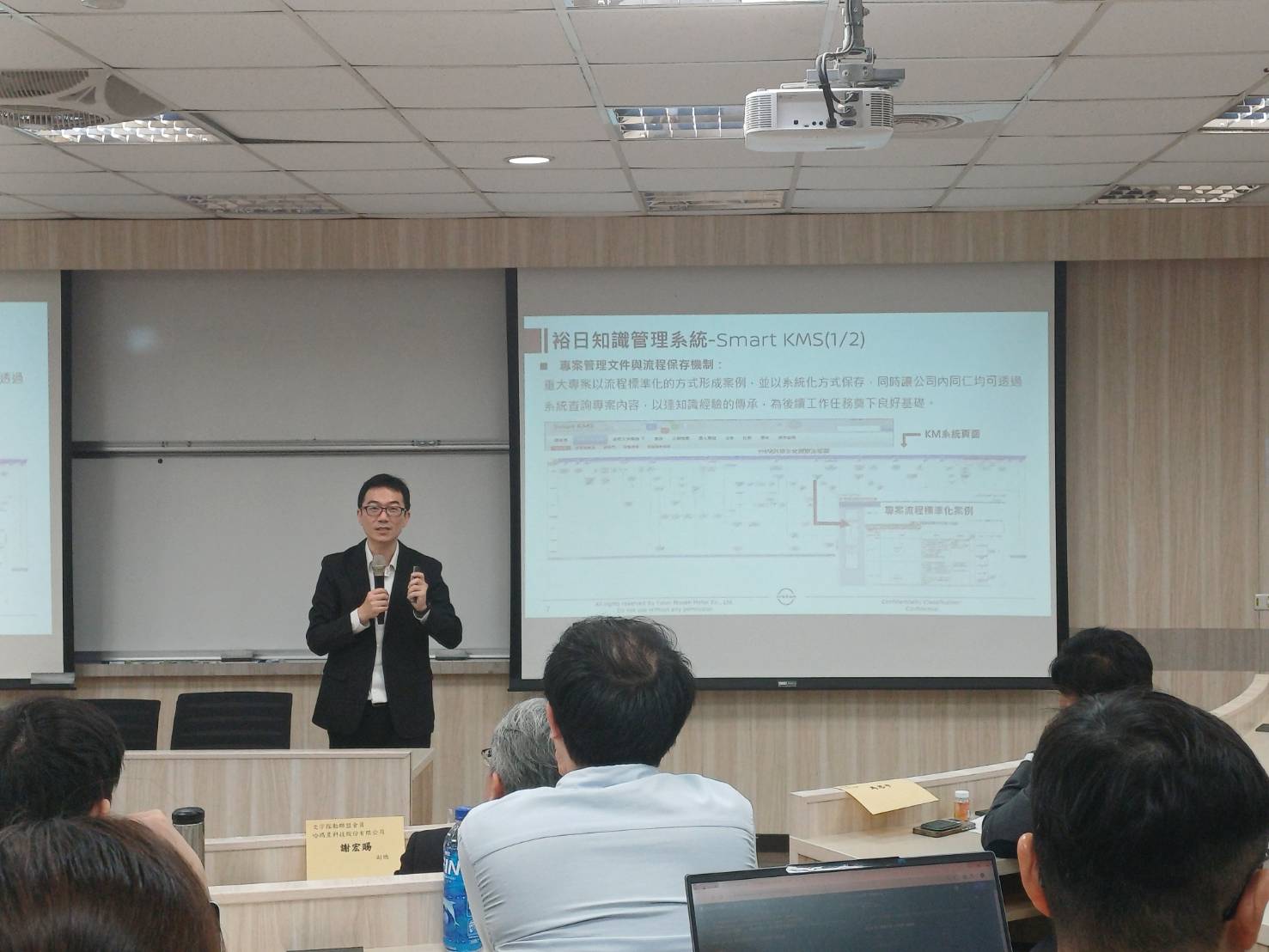
The second speaker, Mr. Lin Jui-Yi, Assistant Manager at Yulon Nissan Motor, shared how generative AI was applied to enhance internal knowledge management. By developing an LLM-based intelligent conversational system, the company successfully integrated over ten thousand process documents, enabling employees to access information in real time and reducing communication costs. Despite initial challenges, user satisfaction significantly improved, demonstrating a successful digital transformation journey.
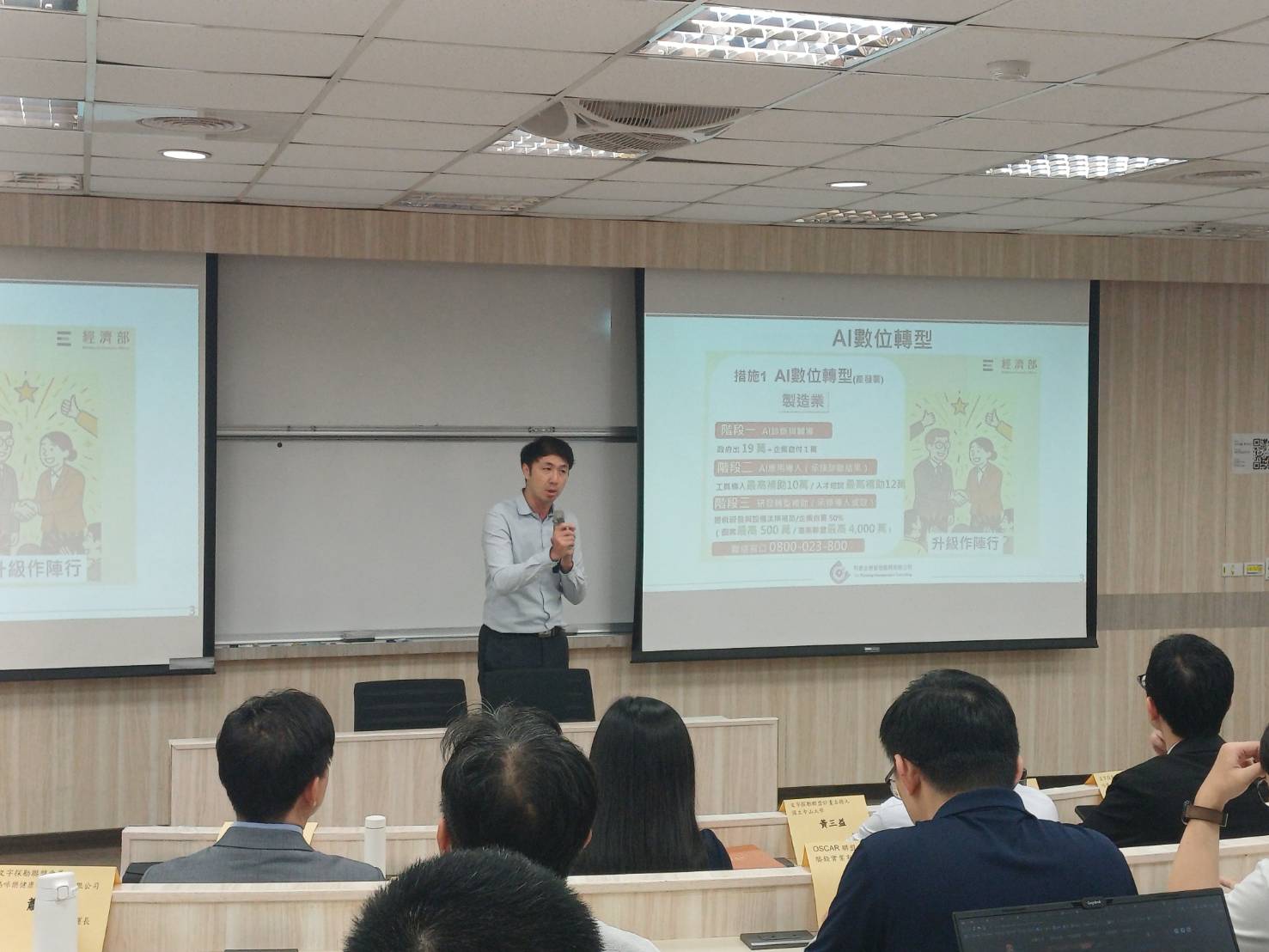
The third speaker, Mr. Hsiao Po-Yen, CEO of Kexin Enterprise and an industrial consultant at ITRI, introduced government subsidy programs supporting AI-driven transformation. He guided enterprises through transformation stages from diagnosis to implementation, helping convert sustainability risks into long-term competitive advantages.
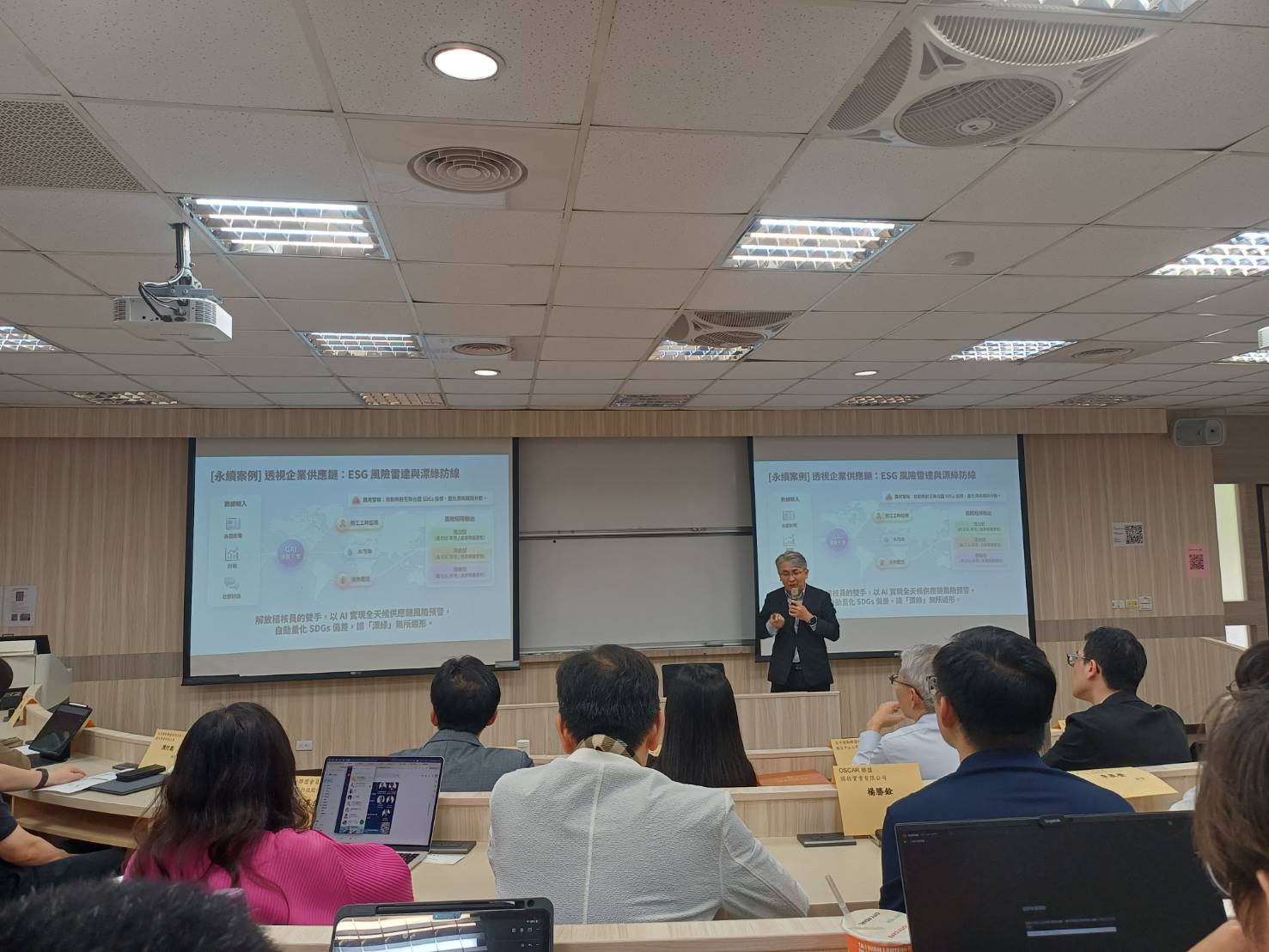
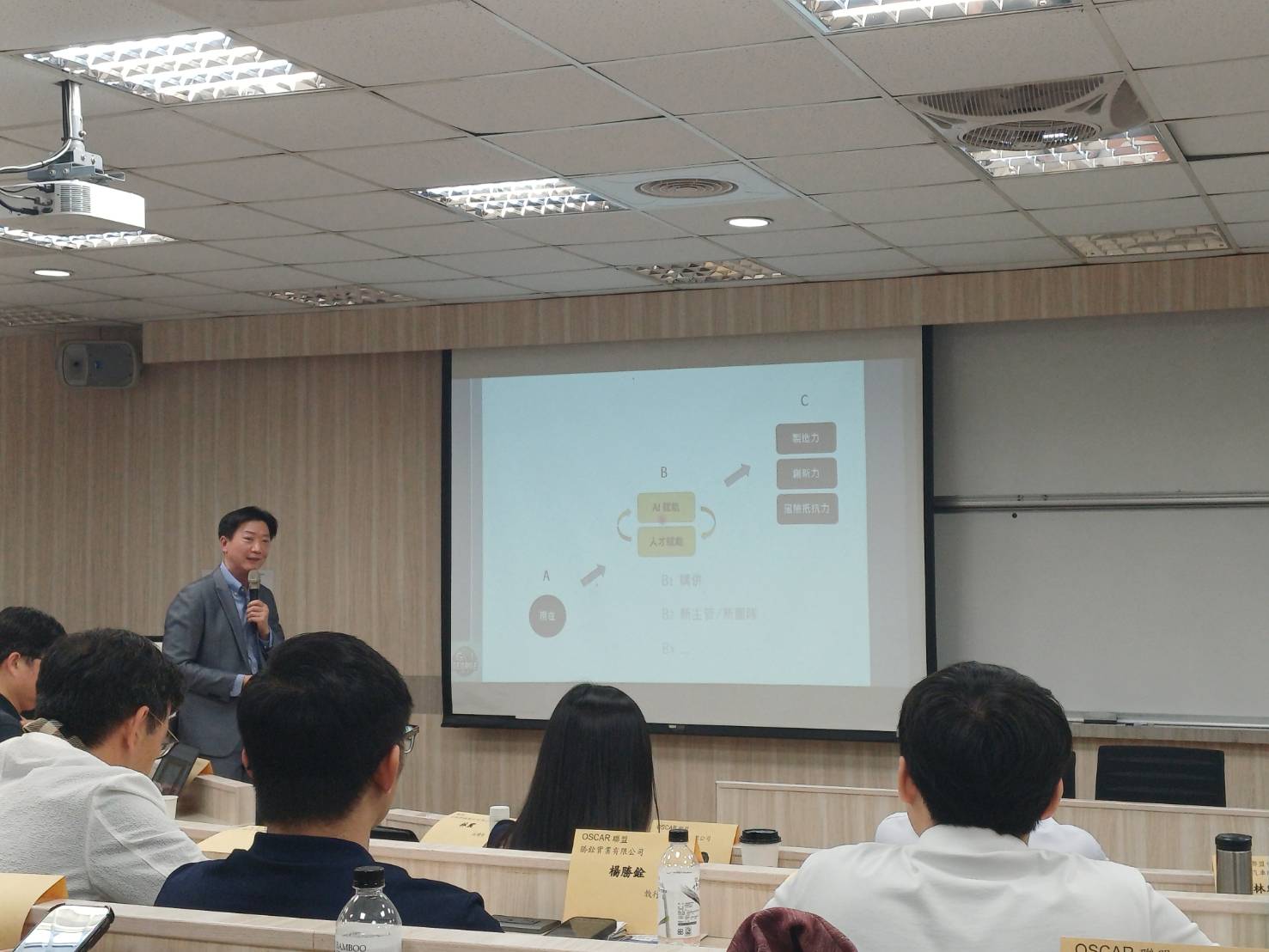
After a networking break, the fourth speaker, Mr. Lin Chen, Chief Sustainability Officer of Taiflex Scientific, addressed how AI can empower sustainable governance. In response to socio-economic changes, he emphasized shifting from traditional sustainability approaches to sustainability risk management, redefining core capabilities such as manufacturing strength, innovation, and resilience. He also discussed leveraging digital tools to enhance supply chain resilience and energy security.
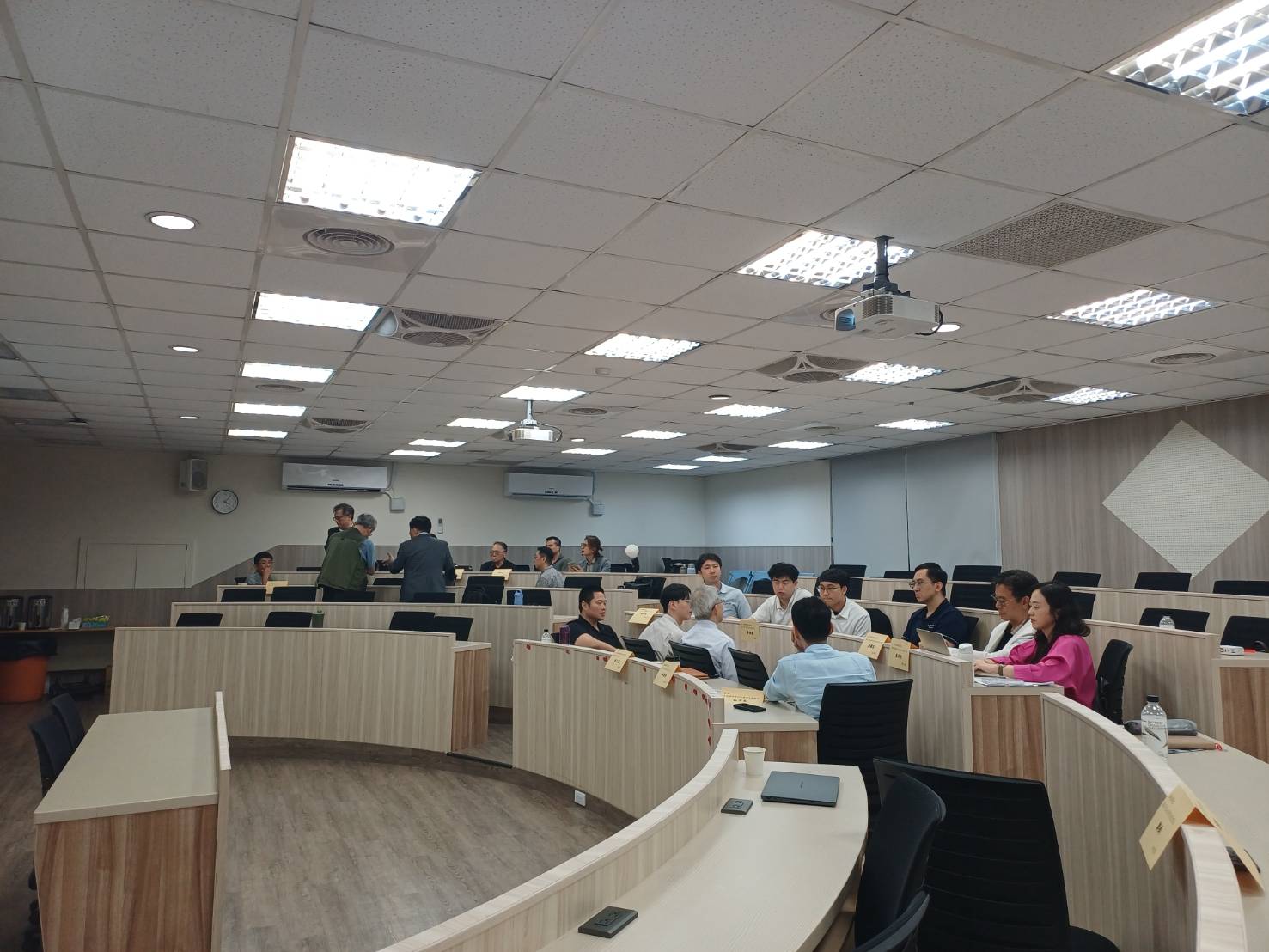
Following the keynote sessions, a “Dual-Transformation Roundtable Discussion” was conducted, jointly organized by both alliances. Participants were divided into groups to explore how AI can support enterprises in achieving both digital transformation and net-zero goals, while fostering cross-domain collaboration among enterprises, AI solution providers, and sustainability consultants.
The discussions covered AI application scenarios across industries including services, IT, and marketing. Each group was guided by facilitators who documented key insights. The session concluded with the identification of several promising and feasible AI application directions, providing valuable references for future industry transformation and collaboration.
The event concluded successfully, receiving highly positive feedback from participants, who found the forum insightful and practically valuable. Moreover, the collaboration between the two alliances was significantly strengthened, enhancing cross-domain integration and establishing a solid foundation for future cooperation in promoting AI applications and sustainable transformation.
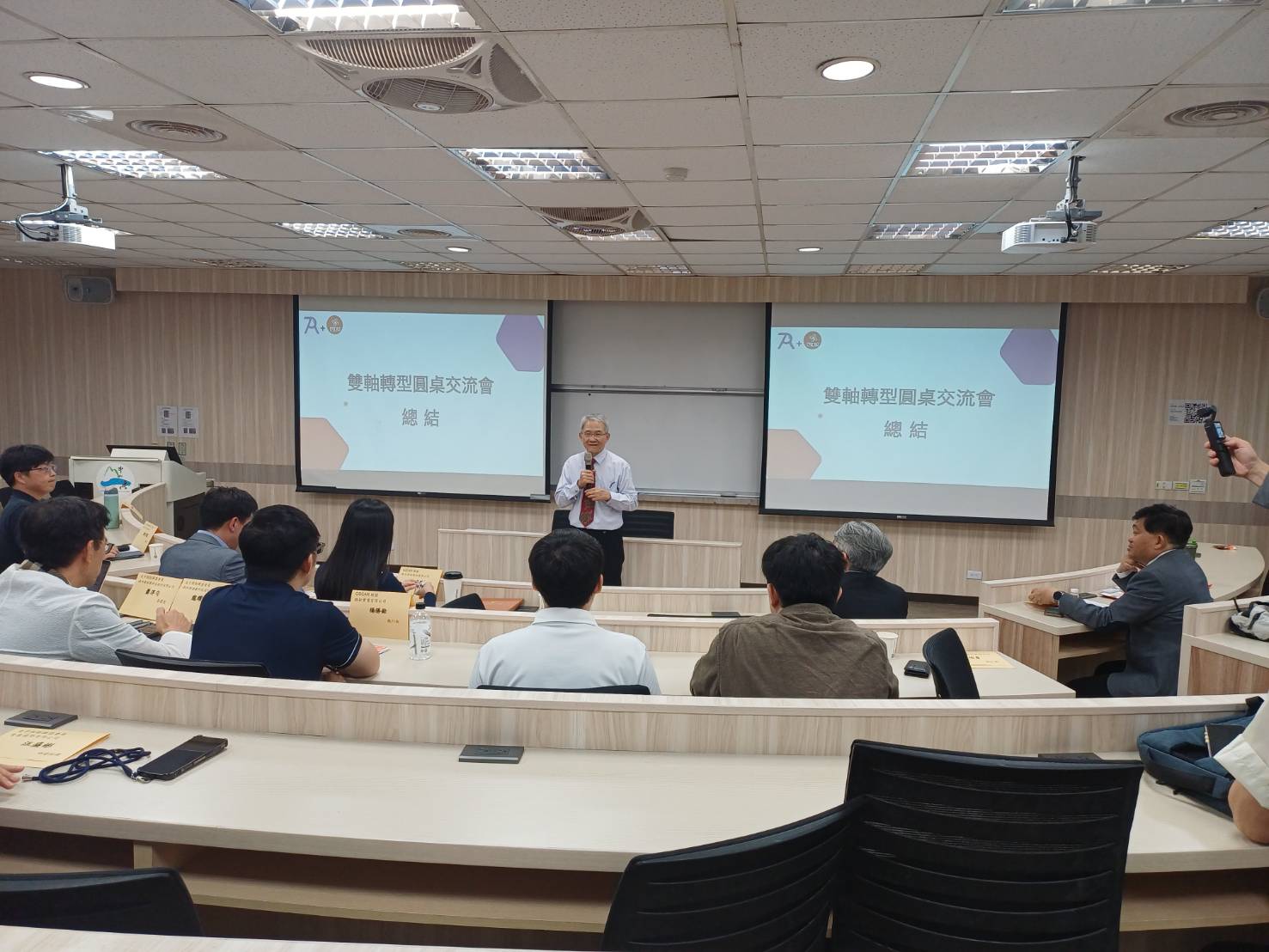
In the closing remarks, Prof. Huang San-Yi summarized key AI adoption insights, emphasizing that enterprises should start with practical, high-frequency use cases and adopt a “start small, then scale” approach. He noted that while technology serves as a tool, organizational acceptance is critical. Enterprises are encouraged to leverage tools such as ChatGPT, Google Gemini, and Claude as supporting resources, while continuously optimizing systems to ensure long-term value creation and support for digital transformation.
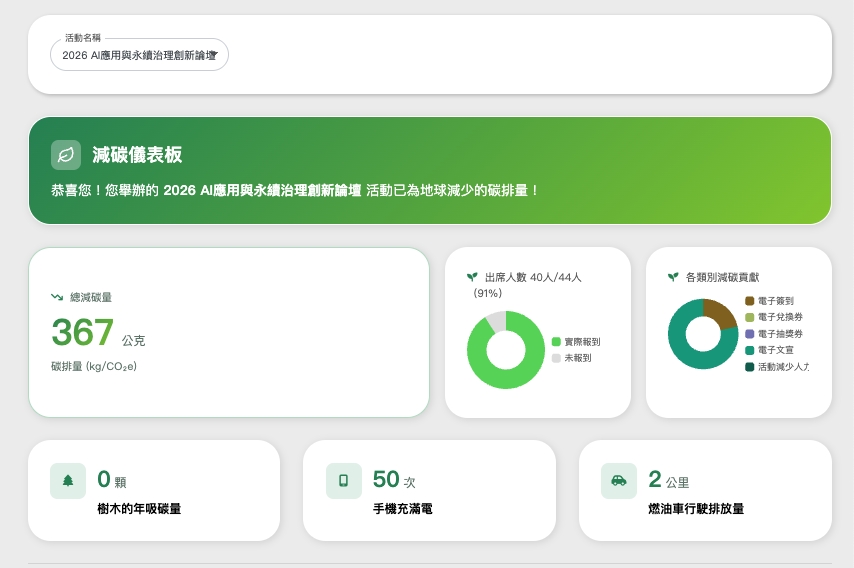
Event carbon reduction estimation: